

Psychologist warns about health issues linked to Donald Trump’s late-night posting habit
Psychologist Flags Trump's Overnight Posting Habits as Potential Sign of Disrupted Sleep


Since the escalation of military tensions between the U.S., Israel and Iran, Donald Trump’s social media activity has caught widespread attention for its intensity and unpredictability. From strong warnings about global conflicts to personal remarks about public figures and even sharing an AI image of him as Jesus, his posts have sparked debate and concern online.
Now, a clinical psychologist has flagged a pattern in Trump's late-night social media activity. Her analysis not only unpacked the patterns behind his online behavior, but also raised concerns over his cognitive pattern.
Clinical Psychologist Analyzed Donald Trump's Online Activity
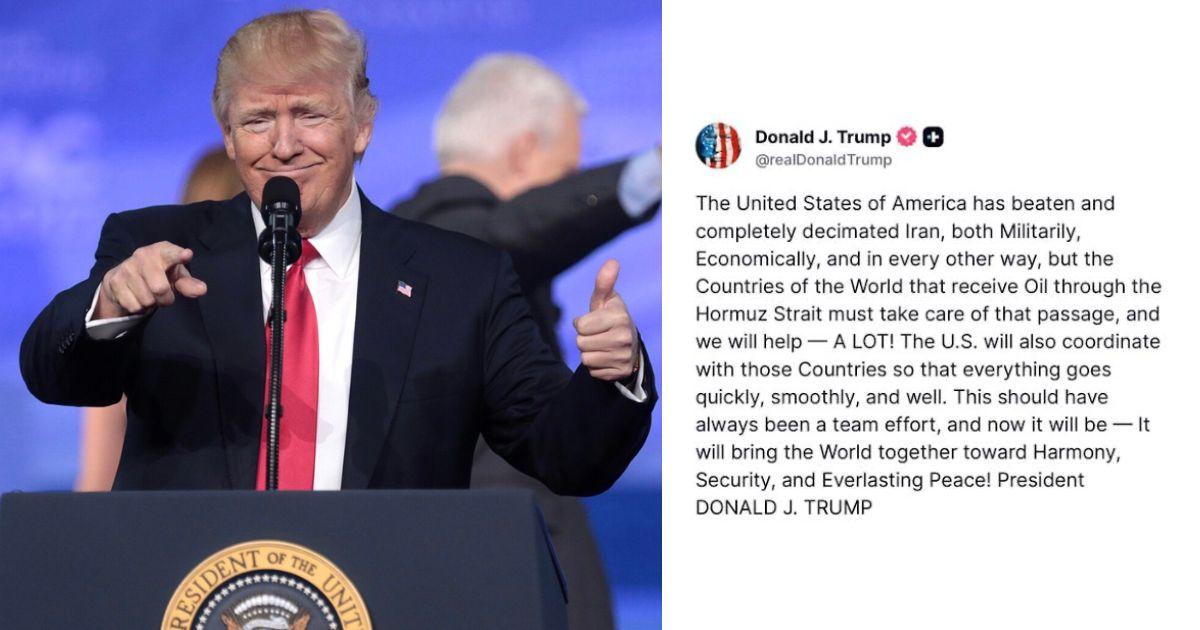
Donald Trump’s Truth Social post
Speaking with The Mirror U.S., Dr. Tracy King said the timing, tone, and frequency of his posts seem to reflect a troubling cognitive trend.
According to King, Trump’s posts are often shared late at night or early in the morning, which could suggest disrupted sleep. In addition, she also explained that the speed and emotional intensity at which Trump posts, it seemingly indicate reduced filtering between his thoughts and expressions.
Dr. King said, “The volume, the overnight timing, and the intensity all suggest a high level of nervous system activation. Posting repeatedly in this way can function as a form of regulation, a way of discharging internal pressure by pushing it outward.” She explained that frequent posting may act as a release of internal pressure.
“Rather than slowing down, thinking something through, and then communicating it, the thinking and the expression seem to be happening together.” She said. King further added, “These posts are appearing late at night and into the early morning, which raises the possibility of reduced or disrupted sleep.”
Dr. Tracy King Links Trump’s Late-Night Posts to Cognitive Performance
While discussing how the president might be using his posts as a way of releasing his internal pressure, Dr. Tracy King warned that this pattern of late-night or early-morning posting could affect decision-making, as it suggests heightened nervous system activity and limited deliberation.
Further explaining the possible risks linked to late-night social media activity, Dr. King stressed that posting times alone cannot confirm a person’s sleep habits. However, she clarified that lack of sleep is widely known to affect cognitive functioning. “We do know that lack of sleep affects cognitive functioning.” She noted.
“It is associated with greater impulsivity, faster but less considered decisions, reduced emotional regulation, and a stronger reliance on instinctive responses.” Dr. King shared. She further added, “In decision-making terms, this combination of intensity, certainty, and speed can shorten the gap between impulse and action.”
“It can narrow perspective, making it harder to adapt, reconsider, or tolerate ambiguity.” She said, “The volume, the certainty, the capitalization, and the dominance framing are all effective tools for controlling the narrative and projecting strength. The line between deliberate performance for the sake of strategy and genuine high arousal can start to blur.” King said in closing.
The clinical psychologist finally ended her discussion by warning, “When someone in a position of power communicates like this, the behavior does not merely express a viewpoint. It shapes reality.”