

Lauren Greenfield exclusively tells Morning Honey about how kids are reacting to AI in a new short documentary.
Exclusive: Acclaimed Filmmaker Lauren Greenfield Tackles AI and How Kids 'Shape How Technology Benefits Them' in New Short Documentary
Jan. 22 2026, Published 2:53 p.m. ET


What would happen if we asked kids about how they feel about AI?
Well, that's exactly what acclaimed cultural documentarian Lauren Greenfield did!
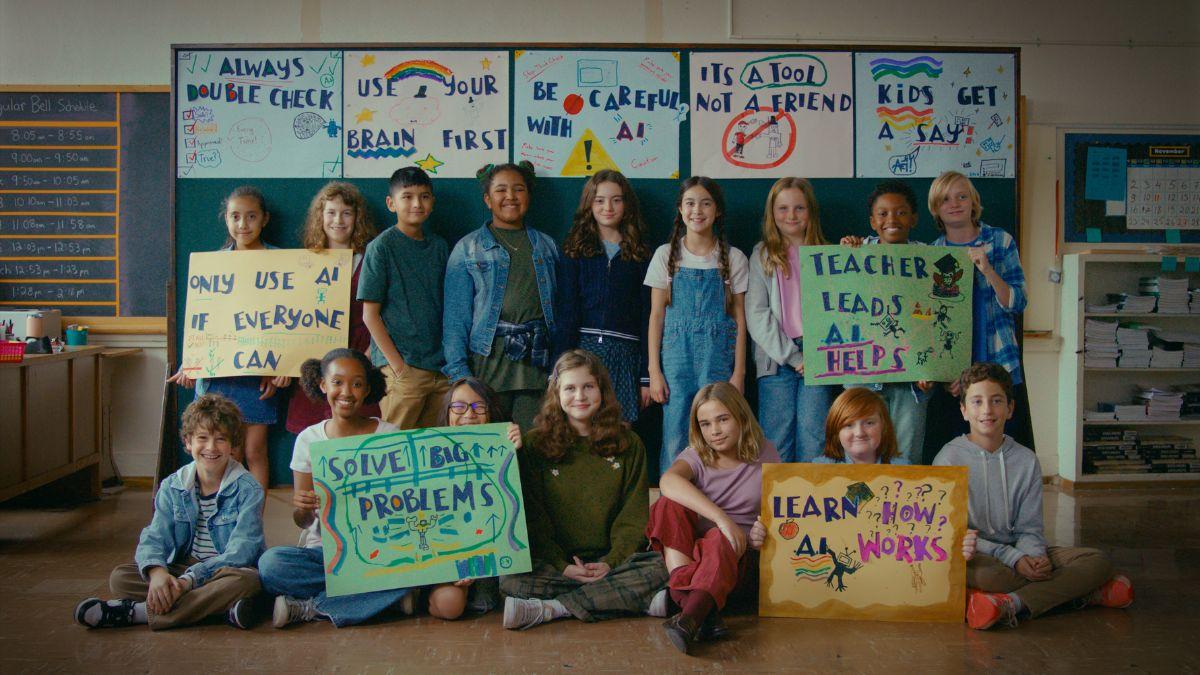
Lauren Greenfield asked kids about how AI for a new campaign.
Greenfield, who has worked on Social Studies, The Queen of Versailles, Always Like a Girl, partnered with LEGO Education to work on a new campaign titled We Trust in Kids, which hands the AI education conversation to students at a time when they feel the adults have all the control (65 percent of kids feel excluded from AI conversations and 83 percent say adults control how it’s taught).
The film captures unscripted conversations in which kids seek to define how AI should be used and governed in education
"This is the first time I’ve worked with LEGO Education, but I have worked before with Judy John from Edelman, who I did the Like a Girl spot with. She reached out about LEGO because she knew my work on social experiments like Like a Girl, and she was also familiar with the show I launched last year on FX and Hulu called Social Studies," Greenfield exclusively tells Morning Honey.
"Social Studies focused on kids, social media, and teenagers in L.A. — teenagers who trusted me with all of their social media — and it was told entirely from their point of view. This piece about AI was always thought of as kid-centered: hearing directly from kids about where we are right now in culture and education with regards to AI," she continues.
After working on Social Studies, where she spent "several years digging into how kids were affected by social media," this new concept really "excited" Greenfield.
"As Sydney, one of the girls in the show, said, kids became 'the guinea pig generation.' It was a massive experiment done without permission and without parents or educators fully understanding what they were walking into," she explains. "A big part of Social Studies was seeing, for the first time and from their point of view, the daily stress, anxiety, and harm. That’s why LEGO Education’s intent stood out to me. They’re looking at this brave new world of AI — which can feel scary — without baggage, with an eye toward the future, and with kids actively involved in shaping how the technology benefits them."
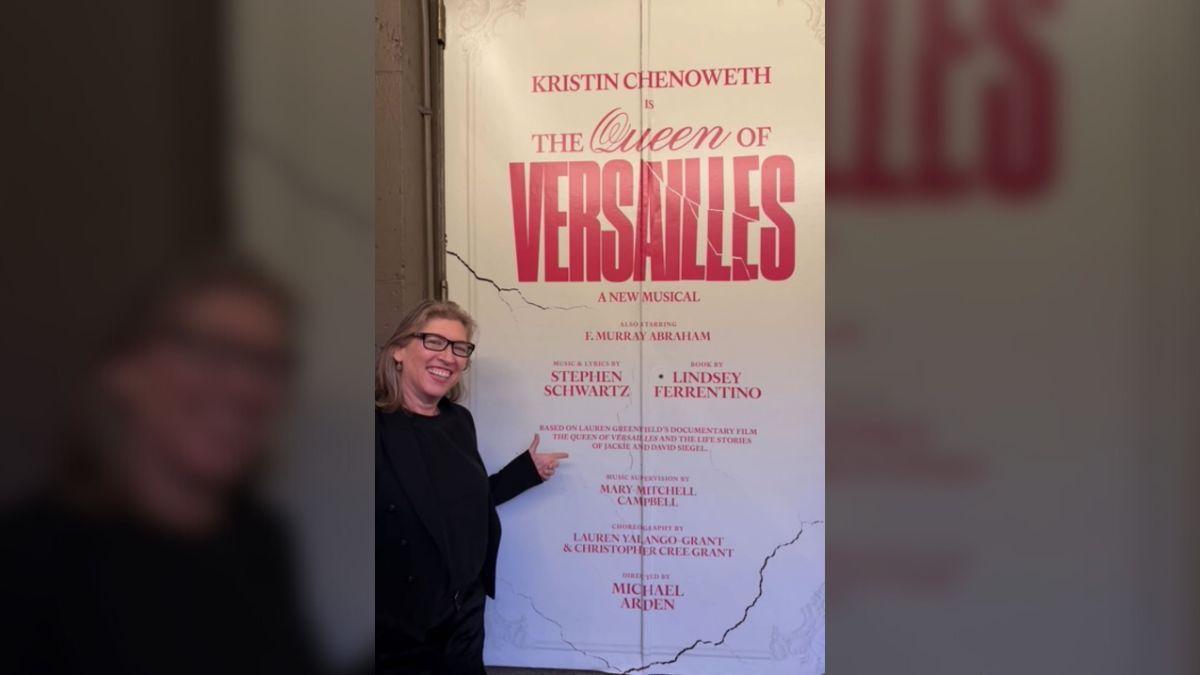
Lauren Greenfield has worked on several projects, including 'Social Studies' and 'The Queen of Versailles.'
She adds, "I was really impressed by LEGO Education’s commitment to kids’ well-being and to looking at AI in a way that benefits kids now and in the future. That’s a critical missing piece that tech companies didn’t have when they introduced social media to kids. LEGO Education is actually in the business of education and making things that help kids learn. I was excited by the idea of getting in early — so kids don’t have to be the guinea pig generation again — and instead introducing AI with mindfulness and thoughtfulness, engaging kids in the questions of how it can benefit them and what guardrails are needed to keep everyone safe."
The short documentary talks about AI entering classrooms. Since Greenfield followed kids for about a year when working on Social Studies, this project was "set up more like a social experiment, similar to Like a Girl."
"We selected kids from schools all over Los Angeles — from different backgrounds socioeconomically, educationally, and in terms of their relationship to technology — and brought them together in a classroom for a day," she shares. "They didn’t know what they were coming to talk about. They thought they were there to learn about science or AI in a traditional classroom setting. As they discussed AI, they raised concerns around cheating, AI as a friend, and other pitfalls — many of which they were already surprisingly aware of."
She continues, "The turning point came when the teacher asked, 'How would you fix it?' That sparked a brainstorming session that was incredibly inspiring. We watched kids grapple with difficult questions and come up with rules to make AI safe, empowering and useful in the classroom. They talked about getting their hands dirty in the sandbox in a safe, playful way, thinking about how AI can help their education, their learning, and eventually make the world a better place. Seeing kids from different backgrounds collaborate in such a productive, positive way was really exciting."
Greenfield was surprised by how "ethical and responsible" the kids were. "It wasn’t about shortcuts or cheating. It was about how to use AI positively, without harming learning. Harry said, 'You need a friend who’s going to be honest with you and AI is always telling you what you want to hear.' That kind of honest candor from kids makes you laugh, but it also puts into words things we recognize about AI but haven’t articulated. This isn’t just a spot for kids, parents, or educators — it’s for anyone. Their experience with AI mirrors everyone’s experience. When they say, 'We need a class to teach us how to use AI,' I feel the same way. By the end, it sounded crazy to say 'let kids make the rules,' but we all walked away thinking, we need to listen to the kids," she notes.
Greenfield said the kids were "deeply curious" about AI and how our world is changing.
"Kids want to understand what’s under the hood — how to code, how AI functions, and how to make it better," she states. "That curiosity gives me comfort when it comes to concerns around bias, representation and equity. In Social Studies, kids talked about how oppressive beauty standards were amplified on social media. Seeing these same kids want fairness and equity built into AI made me think: if the future is in their hands, I feel more comfortable with that than leaving it solely to tech companies."
"Kids are the experts and the early adopters. These kids are 11 years old and already know so much about AI. They’ve already been exposed to it. Trying to put it in a box or ignore it isn’t realistic," she notes.
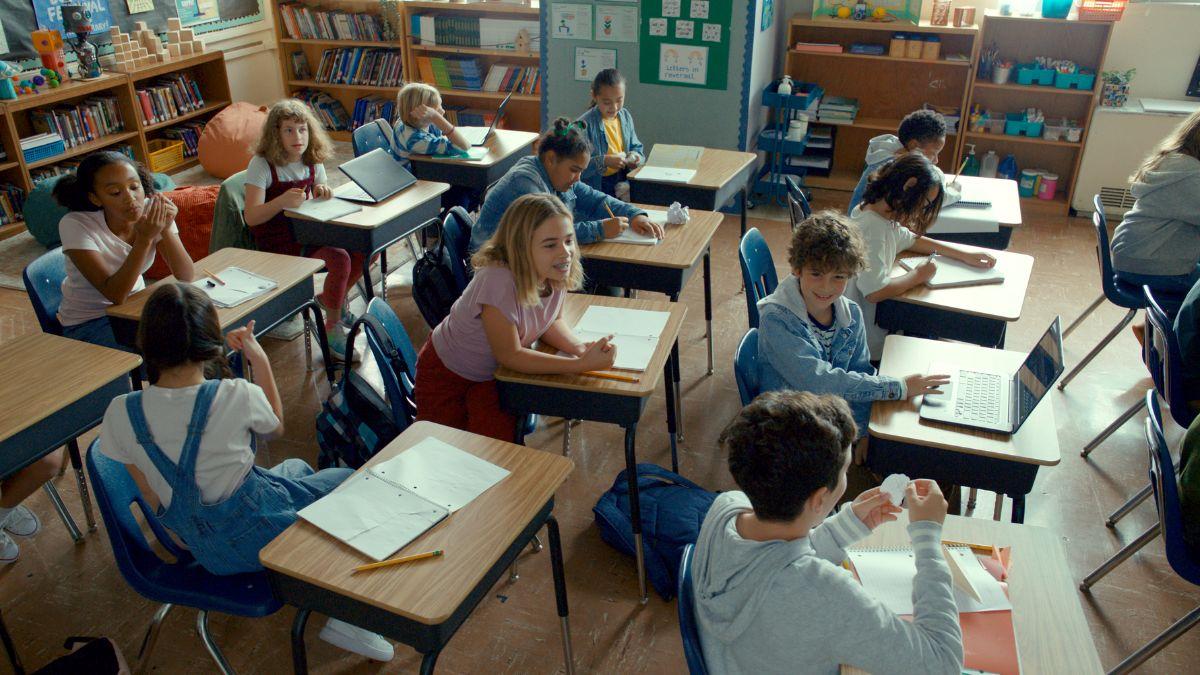
The kids are 'curious' about AI, the filmmaker said.
With screens ruling kids' — and adults' — lives, it's tough to not get sucked in.
"From Social Studies, I saw firsthand how dangerous it can be for kids to be on screens 8, 10, or 12 hours a day — especially in the unregulated Wild West of social media," she says, adding that's why what LEGO Education is doing is an "opportunity to introduce AI in a way that’s mindful, thoughtful and centered on kids’ interests. This isn’t technology kids should just discover on their own. It needs to be brought into the classroom safely, with intention."
"One thing I learned is that LEGO Education isn’t using generative AI — the kind that powers tools like ChatGPT — because they don’t believe it’s safe for kids yet. They’re focusing on engineering- and science-based AI," she says. "In our experiment, we dealt with the real world, where generative AI already exists. The key difference was shifting away from an authoritarian classroom model. Instead of teachers having all the answers, kids were asked what they think — and then asked how they would fix the problems. That opened up an imaginative, positive conversation about potential, guardrails, and responsibility. These aren’t meant to be final rules — they’re a starting point. We hope teachers, students, and parents continue these conversations together, because this is something everyone needs to be part of. I hope that they feel empowered with their voices."
She concludes, "I’m impressed with LEGO Education’s dedication to kids’ wellbeing and their commitment to approaching AI in a way that’s thoughtful, responsible and future-focused."